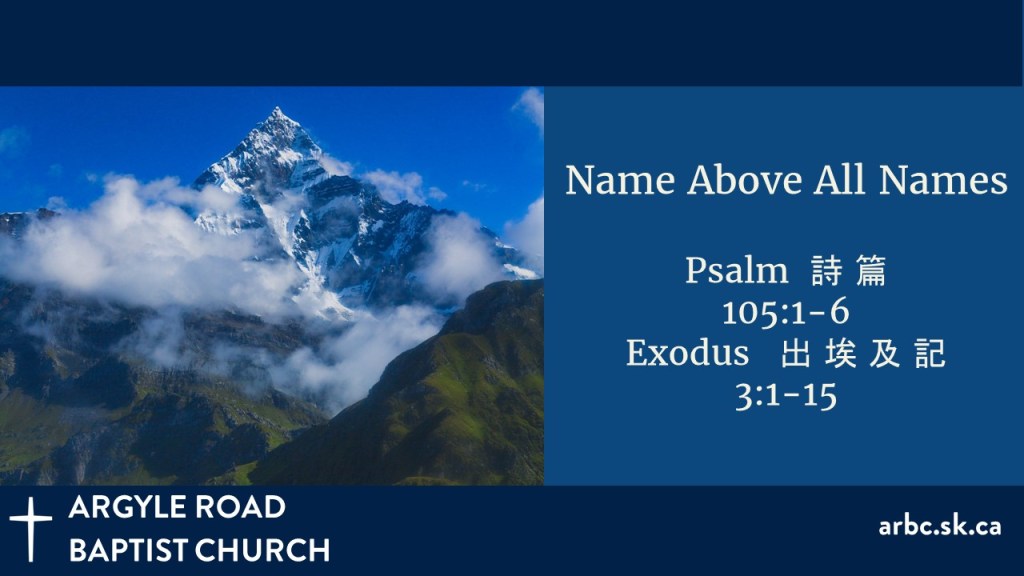
When God appeared to Moses in the burning bush, he gave his name as “I Am who I Am”, or more accurately translated, “I Will Be who I Will Be”. What does this story have to do with us?
The Apostle Paul urges us to allow God’s Spirit to change us by changing how we think about ourselves. How does this work, and what happens next? For what purpose does God make us into new people?
“After Transformation” by Pastor Ryan Emmons
Pastor Ryan began his sermon with this quote from New Testament scholar Douglas Moo:
Romans has the reputation – well deserved – of being one of the most theological books in the Bible. Unfortunately, this reputation has led many Christians and even some commentators to wonder why Paul bothers with all the practical stuff at the end of the letter. He has finished the theology section at the end of chapter 11. Why say any more? Such an attitude betrays a basic misunderstanding of theology and its significance. All theology is practical, and all practice, if it is truly Christian, is theological. Paul’s gospel is deeply theological, but it is also eminently practical. The good news of Jesus Christ is intended to transform a person’s life. Until individual Christians own and live out the theology, the gospel has not accomplished its purpose.
In spring and early summer of 2026, Pastor Ryan preached a sermon series based on what he teaches baptismal candidates about life as a Christian in the church.
The third section of the Apostles’ Creed talks about the Holy Spirit. In this sermon, Pastor Ryan focuses on the Holy Spirit working in and through the church.
Sin effectively distances us from God, pushing us into exile from his kingdom. Jesus is the one who brings us back. Pastor Ryan traces the idea of exile through the entire Old Testament and into our lives.
Paul wrote “Do not be conformed to the world, but be transformed by the renewing of your minds.” The story of Namaan in the Old Testament book of 1 Kings can help us understand what this means.

![Romans 12:1 in the Amplified Version: I appeal to you therefore, brethren, and beg of you in view of [all] the mercies of God, to make a decisive dedication of your bodies [presenting all your members and faculties] as a living sacrifice, holy (devoted, consecrated) and well-pleasing to God, which is your reasonable (rational, intelligent) service and spiritual worship.](https://arbc.sk.ca/wp-content/uploads/2026/05/romans-12-1-amplified-may-17.jpg?w=1024)