Did you know that, as Christians, we have an obligation to love those around us. This is not just a suggestion; Jesus commanded it and the Apostle Paul calls it a debt.
When God appeared to Moses in the burning bush, he gave his name as “I Am who I Am”, or more accurately translated, “I Will Be who I Will Be”. What does this story have to do with us?
The Apostle Paul urges us to allow God’s Spirit to change us by changing how we think about ourselves. How does this work, and what happens next? For what purpose does God make us into new people?
“After Transformation” by Pastor Ryan Emmons
Pastor Ryan began his sermon with this quote from New Testament scholar Douglas Moo:
Romans has the reputation – well deserved – of being one of the most theological books in the Bible. Unfortunately, this reputation has led many Christians and even some commentators to wonder why Paul bothers with all the practical stuff at the end of the letter. He has finished the theology section at the end of chapter 11. Why say any more? Such an attitude betrays a basic misunderstanding of theology and its significance. All theology is practical, and all practice, if it is truly Christian, is theological. Paul’s gospel is deeply theological, but it is also eminently practical. The good news of Jesus Christ is intended to transform a person’s life. Until individual Christians own and live out the theology, the gospel has not accomplished its purpose.
Are we good and “Christian” on the outside only, or also in the inside? Pastor Ryan shares what Jesus said about this, and offers a few things we can do to check the status of our hearts.
Sometimes, life does not feel fair. Pastor Ryan pulls out lessons from the story of Elijah to help us respond well when we feel hard done by as Christians. How do we approach God in these circumstances?
People in Jesus’ time had lots of different ideas about him. So do we. The question for us is, which of our ideas about Jesus (and God) are consistent with what the Bible says about Him?
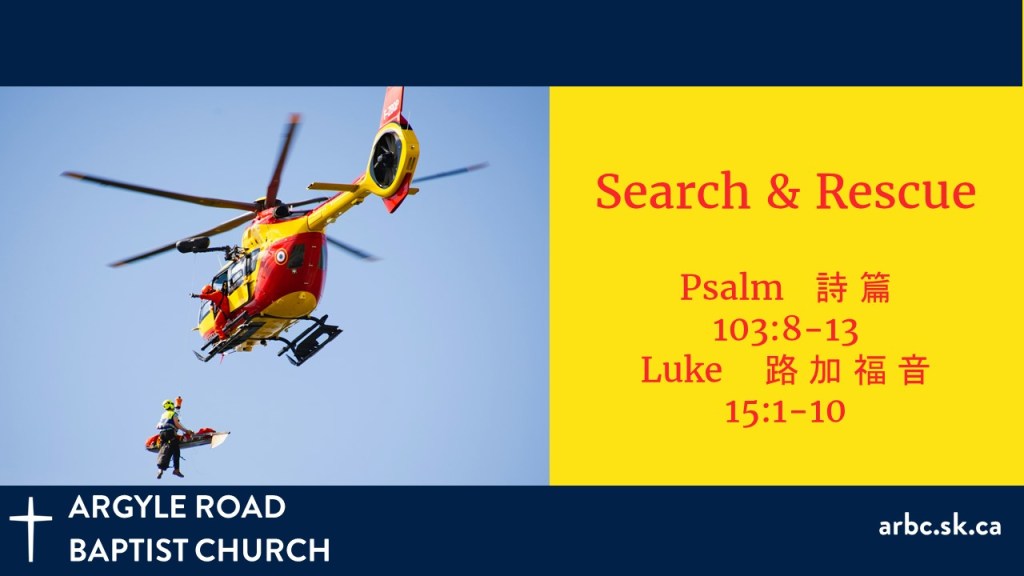
God loves us. He loves us so much that he mounted a huge Search & Rescue operation to save us from the darkness of this world. Guest pastor Ryan Tuck elaborates on this mission in the context of Jesus’ parables about three lost things: a sheep, a coin, and a son.
“Have Mercy on Me!” Blind Bartimaeus called out to Jesus from the side of the road. Jesus answered, and Bartimaeus leapt up and followed. Pastor Barry Bruce encourages us to imitate Bartimaeus from wherever we are on our road of life.
“From this Day Forward, Follow Jesus,” by Pastor Barry Bruce
God gives each of us exactly the same blessing of forgiveness and new life in Jesus. How does He judge us according to our deeds after that? According to how we treat one another, primarily within “the family” of others who have received the same blessing.