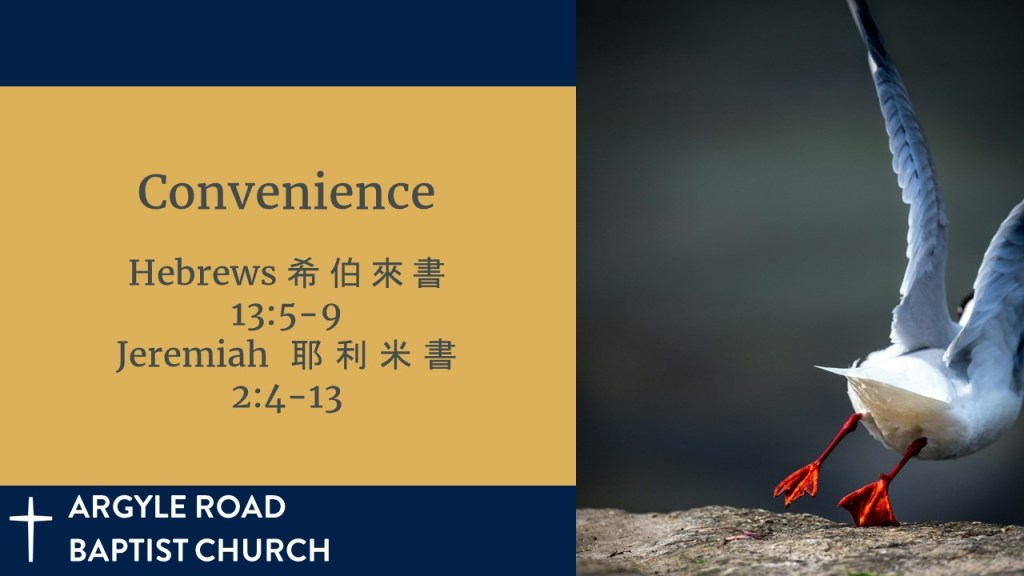
The prophet Jeremiah asked, “Why have the people replaced God with false gods?” Pastor Ryan explores the concept of worshiping God (obeying, following, etc.) for what He has done, not for what we hope for or want Him to do for us.

“Convenience”, by Pastor Ryan Emmons

Hebrews 13:5-9 (NLT) ; 希 伯 來 書 13:5-9 (CUVS)
Jeremiah 2:4-13 (NLT) ; 耶 利 米 書 2:4-13 (CUVS)


You can set up a real-time transcript when you listen on your device. You can also read Pastor Ryan’s sermon notes (not a transcript).

Photo by Ben Wicks on Unsplash

Have you ever been to a church where you felt like you just didn’t belong? So did the Israelites at Mount Sinai. But now God meets us in a new way.

“Assembly of the Firstborn”, by Pastor Ryan Emmons

Revelation 21:22-27 (NLT) ; 啟 示 錄 21:22-27 (CUVS)
Hebrews 12:18-29 (NLT) ; 希 伯 來 書 12:18-29 (CUVS)


You can set up a real-time transcript when you listen on your device. You can also read Pastor Ryan’s sermon notes (not a transcript).

Pastor Ryan’s sermon “Prepared to Enter” explores how we should prepare ourselves for worship. What kind of character do we need to have if we want to “dwell in the house of the Lord”, or remain in the presence of the Holy One?

Colossians 1:21-23 (NLT) ; 歌 羅 西 書 1:21-23 (CUVS)
Psalm 15 (NLT) ; 詩 篇 15 (CUVS)

You can also download Pastor Ryan’s sermon notes (not a transcript).

Photo by Joshua Sukoff on Unsplash

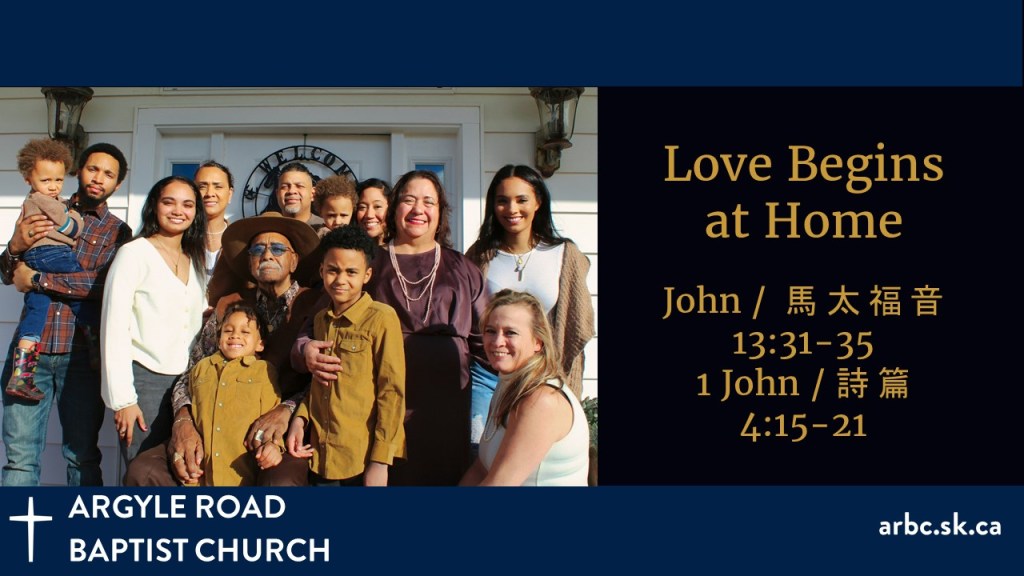
Pastor Ryan’s sermon “Love Begins at Home” teaches that loving one another, within the family of God, is the first thing that must happen before anything beyond that can be fully and truly realized. Also, since our love for others comes from our love for and in Christ, we must fill ourselves with God’s love above all.

John 13:31-35 (NLT) / 約 翰 福 音 13:31-35 (CUVS)
1 John 4:15-21 (NLT) / 約 翰 一 書 4:15-21 (CUVS)

Here is a PDF of Pastor Ryan’s sermon notes (not a transcript) for you to download.

The CBWC Heartland “Theology of the Ordinary” podcasts include a series by Ed Neufeld called “Not Improving On Our Instructions“. It deals with this topic of loving each other as Jesus’s primary instruction to the church.

Photo by Rajiv Perera on Unsplash

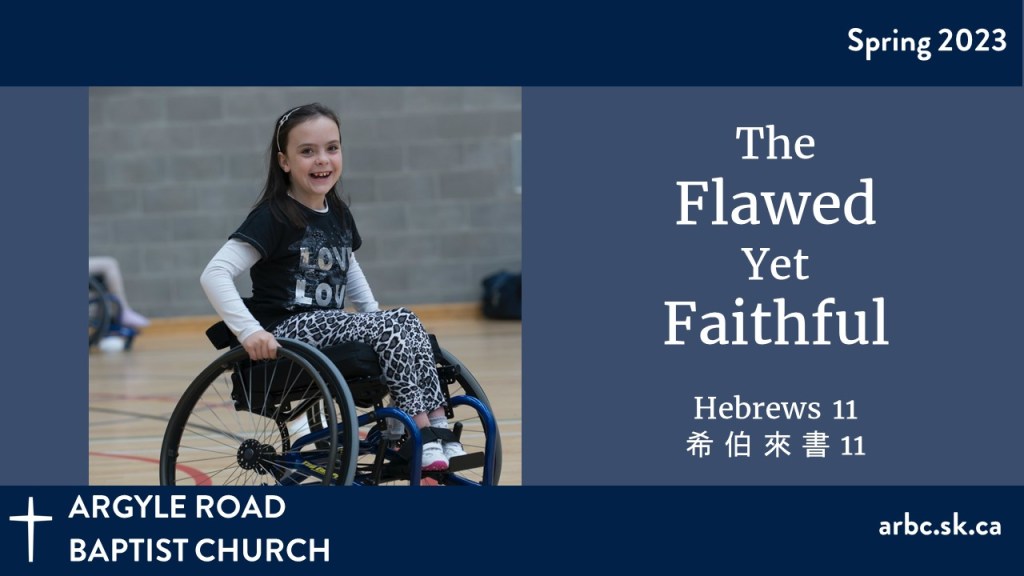
Pastor Ryan’s sermon series “The Flawed Yet Faithful” looks at a few of the people on the list of the “faithful” in chapter 11 of the book of Hebrews. Sometimes this list is called “The Heroes of the Faith”. Each of them was flawed but used by God in mighty ways. What can we learn from them so that God can also use us in spite of our flaws?  

  1. Flawed, but NOT Faithful (Rehoboam)
  2. Abraham
  3. Moses
  4. Rahab
  5. Samson

Photo by Danny Nee on Unsplash

The book of 1 Timothy is a letter from the Apostle Paul to a young man named Timothy. It gives Timothy instructions for instructing the leadership of the local church in Ephesus. But church leadership is not just for the pastor. Deacons and other ministry leaders are chosen from within the church body. Timothy’s instructions apply to everyone in the church who might ever be a leader, or worshiper, of any sort — which is all of us.

Pastor Ryan walks us through the book of 1 Timothy, including the controversial parts. What can we learn from Paul’s letter for our church today?

  1. Resolve for Truth – 1 Timothy 1:1-11
  2. God’s Generous Grace – 1 Timothy 1:12-20
  3. Prayer in Worship – 1 Timothy 2:1-8
  4. Learning in Worship – 1 Timothy 2:9-15
  5. Leadership is Serious Business – 1 Timothy 3:1-13
  6. The Mysterious Pillar of Faith – 1 Timothy 3:14-16
  7. Stay Focused – 1 Timothy 4
  8. More than Just a Word About Widows – 1 Timothy 5:1-16
  9. Not So Easy – 1 Timothy 5:17 – 6:2a
  10. Let’s Not Quibble About Being Content – 1 Timothy 6:2b-10
  11. Run Away! – 1 Timothy 6:11-21

Photo by Wylly Suhendra on Unsplash